

Liquid Crystals
- HOME >
- Business / Products >
- Performance Products >
- Liquid Crystals
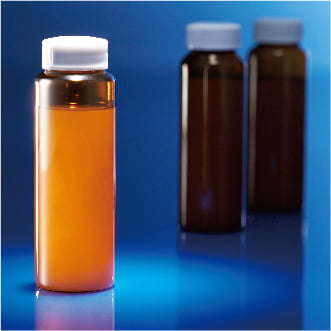
Liquid Crystal
JNC manufactures and supplies liquid crystal materials used in liquid crystal displays and related applications.
Advancing Together with the Evolution of Liquid Crystals: From Discovery to Commercialization
The history of liquid crystals dates back to 1888, when the Austrian botanist Friedrich Reinitzer discovered a state of matter that exhibited the properties of crystals while remaining in a liquid state during his studies of cholesterol derivatives. In 1889, the German physicist Otto Lehmann named this state “liquid crystal.”
Since the introduction of the first liquid crystal display in 1968, liquid crystal technology has been commercialized in calculators and watches and has since expanded rapidly into large-screen televisions and smartphones, particularly after 2000.
JNC has been engaged in the development of liquid crystal materials since the early days of the liquid crystal industry and has designed and developed a wide range of liquid crystal materials compatible with various driving modes and applications.
Tailoring Material Properties to Achieve Desired Panel Performance
These driving modes include vertical electric field modes such as TN, STN, VA, and PSA, as well as in-plane electric field modes such as IPS and FFS.
Although the required properties vary depending on the application, JNC offers both normally white and normally black liquid crystal materials, as well as fluorinated and cyano-based liquid crystal materials. By precisely controlling fundamental material properties such as viscosity, elastic constants, dielectric anisotropy, refractive index anisotropy, and phase transition temperature, JNC provides liquid crystal materials that deliver the panel performance required for each application, including fast response time, high contrast, high reliability, high voltage holding ratio (VHR), and excellent light resistance.
Beyond Displays: Expanding into Advanced Optical Devices
Historically, liquid crystal materials have been primarily used in liquid crystal displays (LCDs) for televisions, mobile phones, smartphones, and IT products such as monitors, notebook PCs, and tablets.
In recent years, their applications have expanded further into LCDs for virtual reality (VR) head-mounted displays (HMDs) and automotive displays, requiring even faster response times, lower power consumption, higher resolution, and wider viewing angles.
Furthermore, liquid crystal materials are increasingly being developed for optical devices beyond displays, including smart dimming films and glass, liquid crystal antennas, liquid crystal on silicon (LCoS), and augmented reality (AR) glasses.
For smart dimming panel applications, JNC has commercialized polymer dispersed liquid crystal (PDLC) materials featuring high reliability, high contrast ratios, and excellent haze characteristics.
Enabling Next-Generation Optical Technologies
In addition to display applications, JNC continues to advance the development of innovative liquid crystal materials for next-generation optical and sensing devices, contributing to the realization of new technologies and enhanced user experiences across a wide range of industries.
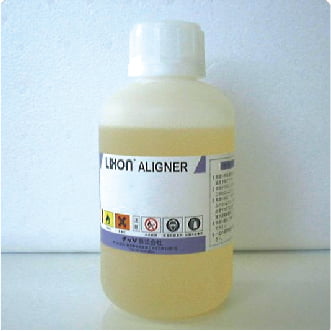
Alignment Materials
An alignment film is a polymer film that aligns liquid crystal molecules, and is an essential material for liquid crystal displays.
JNC’s alignment materials are able to control the orientation and pre-tilt angle of liquid crystal molecules according to the drive mode of the liquid crystal display.
Regarding orientation methods, in addition to the conventional rubbing method, we are also developing materials using the non-rubbing method.
In particular, for alignment films for In-plane switching mode, we have materials for each rubbing and optical alignment processes, achieving high display quality and reliability.
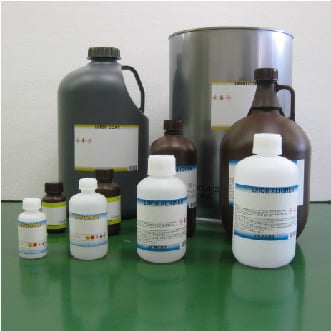
Thermosetting Materials
Thermosetting materials are the films that are cured by heat and used for various purposes. We provide thermosetting materials with various properties according to customer requirements. Overcoat is a thermosetting material used as a protective film for LCD displays.
Thermosetting material
Thermosetting material is able to be cured and form a film by heating after coating. Suitable for creating flat films without patterning. We optimally combine polyimide, acrylic, epoxy, and inorganic materials for each application to design films that brings out the strengths of each materials.
Overcoat
Overcoat, the protective film for color filters, is effective for preventing the harmful effects of impurities from the color filter and flattening the color filter.
JNC’s overcoat material has the advantages of both polyimide and epoxy materials, making it possible to create a protective film with high transparency and high heat resistance.
Contact Us
Liquid Crystals Div.
- PHONE. +81-3-3243-6090
- FAX. +81-3-3243-6069